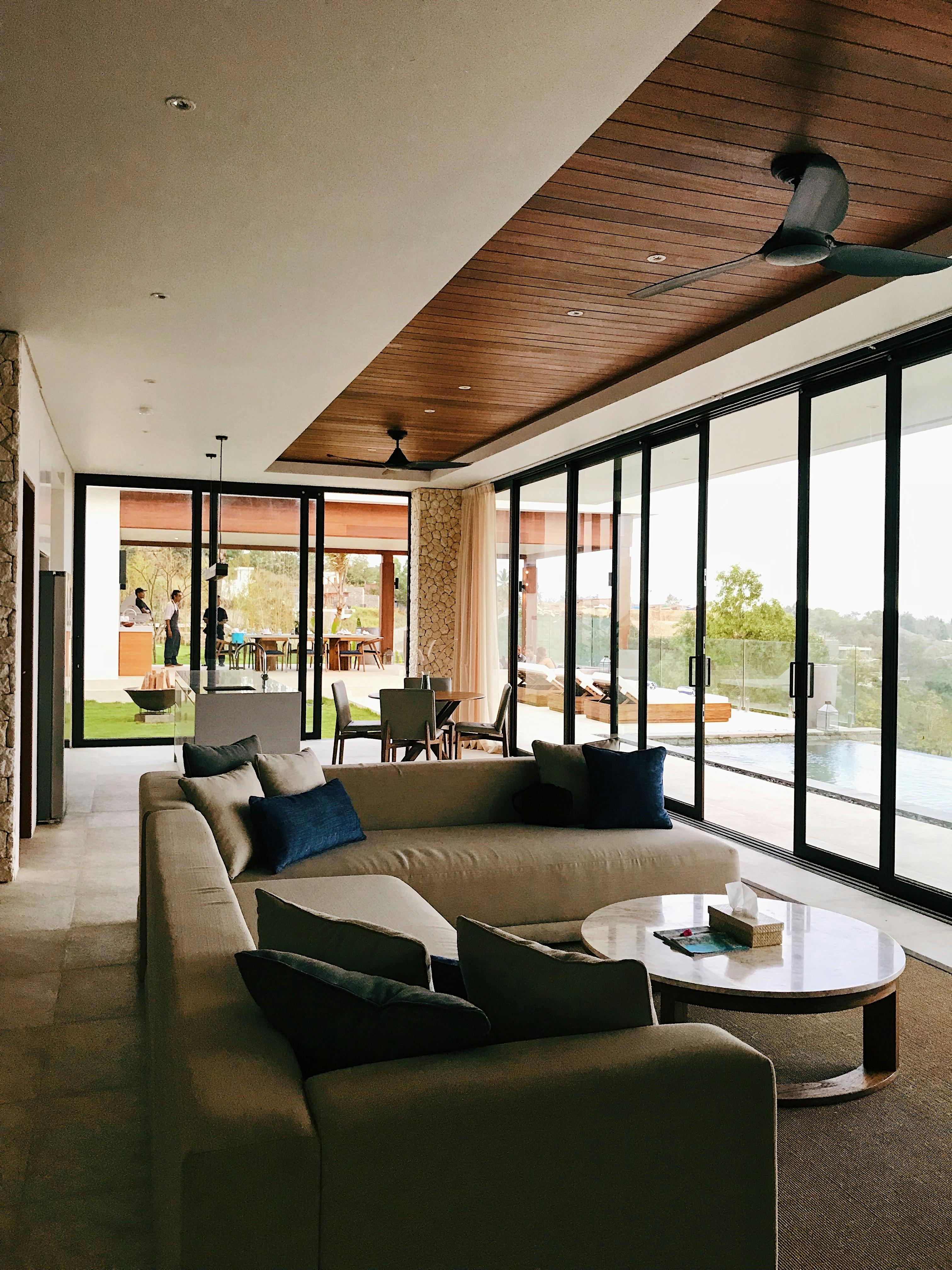
Uluwatu Quiet Luxury Index 2026, Volume I
A proprietary evaluation of ten Uluwatu properties across six dimensions of editorial restraint.
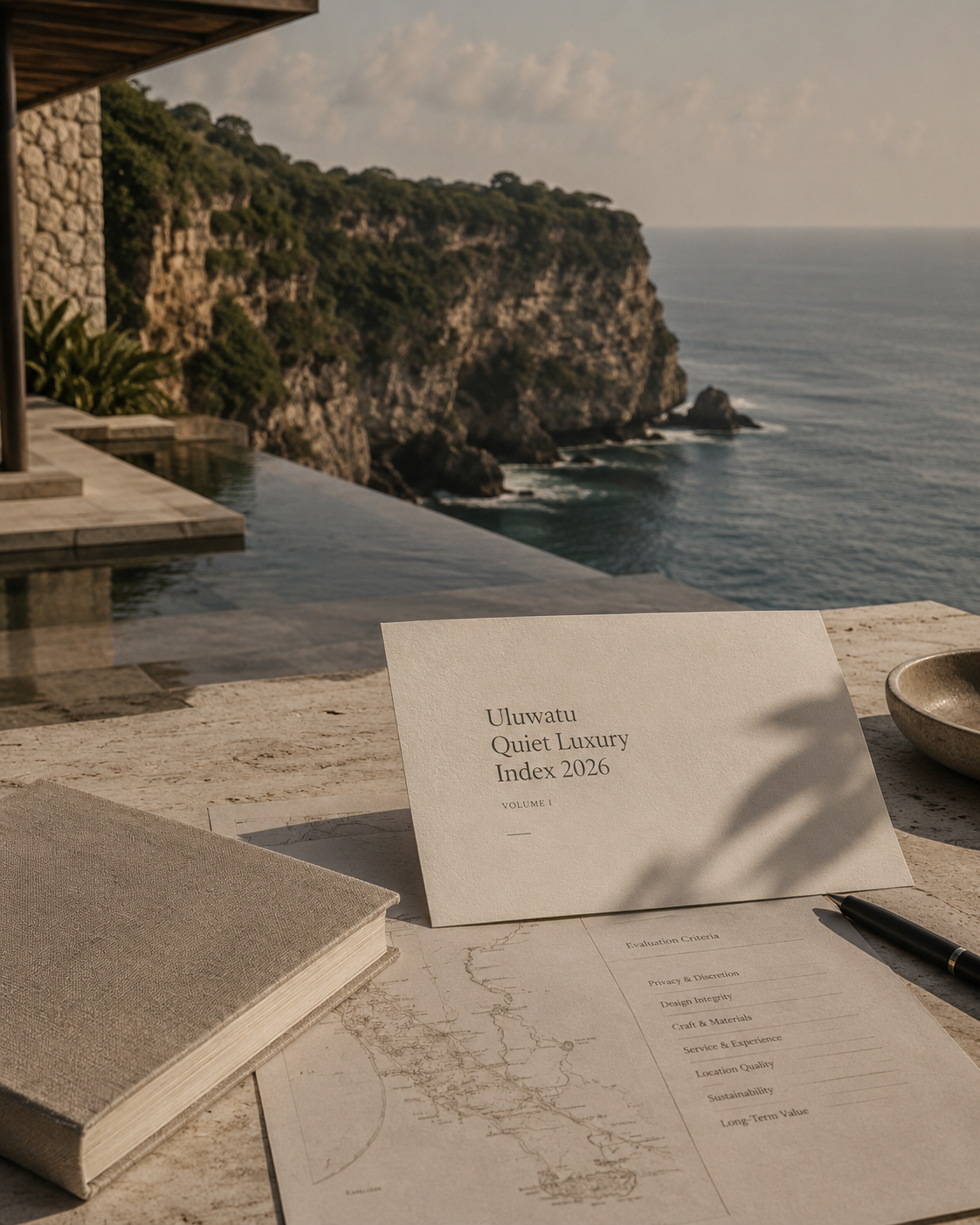
The Carnegie Journal Index
Uluwatu Quiet Luxury Index 2026
Evaluation Dimensions
| Property | SR | SP | BC | CP | MQ | CL | Score |
|---|---|---|---|---|---|---|---|
| ★Alila Villas Uluwatu | 93 | 89 | 92 | 87 | 91 | 86 | 90 |
| Bvlgari Resort Bali | 84 | 90 | 88 | 86 | 89 | 79 | 86 |
| Six Senses Uluwatu | 80 | 84 | 81 | 83 | 82 | 79 | 82 |
Scores are on a 100-point scale per dimension. Composite scores are weighted as described in the methodology.
Why Quiet Luxury Needs a Different Measure
Luxury has long been measured through visible signals: scale, service density, rarity of materials, access, price, and reputation. These remain relevant, but they do not fully explain why certain places feel more intelligent than others. In destinations like Uluwatu, the most valuable hospitality experiences often work by lowering the volume of luxury rather than increasing it.
The Carnegie Journal Index begins from this premise: editorial restraint requires a different measure. It is not enough for a property to be beautiful, expensive, private, or photogenic. The question is whether it understands the place it occupies, and whether it can create value without exhausting attention.
Six Dimensions
For this first Uluwatu volume, we frame editorial restraint across six editorial dimensions.
Landscape Integration asks whether a property works with the cliff, road, vegetation, and horizon rather than treating them as scenery to be consumed.
Architectural Restraint considers proportion, shadow, arrival, material discipline, and the ability to avoid unnecessary spectacle.
Material Language looks at whether the textures, surfaces, and built details feel rooted, coherent, and durable rather than merely fashionable.
Privacy and Arrival measures not secrecy for its own sake, but the intelligence of transition: how a guest moves from road to room, from public to private, from exposure to retreat.
Local Continuity asks whether the property allows the surrounding place to remain legible, rather than replacing it with a sealed hospitality fiction.
Commercial Discretion considers how well the brand resists over-explanation, over-programming, and the conversion of every moment into a sellable surface.
The most refined properties do not erase commerce. They simply prevent commerce from becoming the atmosphere.
What We Chose Not to Reward
This index does not reward spectacle for its own sake. It does not reward the loudest view, the most dramatic pool, the most expensive finish, or the most aggressive claim to authenticity. It does not confuse remoteness with privacy, minimalism with restraint, or brand polish with cultural intelligence.
We are less interested in whether a place can impress at first glance than in whether it can remain persuasive after the first hour. Quiet luxury is a test of duration. It asks whether the experience becomes deeper as attention settles.
A First Volume, Not a Final Verdict
This first volume should be read as a framework rather than a final verdict. Uluwatu is changing quickly. New properties, new dining rooms, new forms of membership, wellness, and hospitality branding continue to alter the cliff economy. Any index that claims finality in such a place would misunderstand the speed of the market.
But a framework matters. It gives language to distinctions that are otherwise felt but not named. It helps separate quiet from empty, privacy from exclusion, restraint from underdesign, and luxury from mere expense.
Toward a More Careful Vocabulary
The phrase editorial restraint risks becoming too easy. Once a term circulates widely, it begins to lose the discipline that made it useful. The task, then, is not to abandon the phrase but to measure it more carefully.
In Uluwatu, editorial restraint is not a beige room, a cliff view, or a promise of escape. It is a set of decisions about what to reveal, what to protect, what to leave unsaid, and how to let a place remain more than a backdrop.
The Uluwatu Quiet Luxury Index begins with a belief that hospitality can be evaluated not only by what it provides, but by what it refuses to overstate. In a destination built on edges, the most important line may be the one between presence and excess.
“Quiet luxury is not the absence of expense. It is the discipline of not making expense the point.”