Temple Time and Tourism Pressure
How Uluwatu communities hold ceremony and continuity amid accelerated growth.
A Different Clock
There are places where visitor time and local time run beside each other without ever becoming the same. Uluwatu is one of them. For the traveler, the day is often divided by reservations, traffic, sunset, and the soft urgency of seeing enough. For the communities who live with the cliff beyond its image, time is held by other structures: ceremony, preparation, obligation, return.
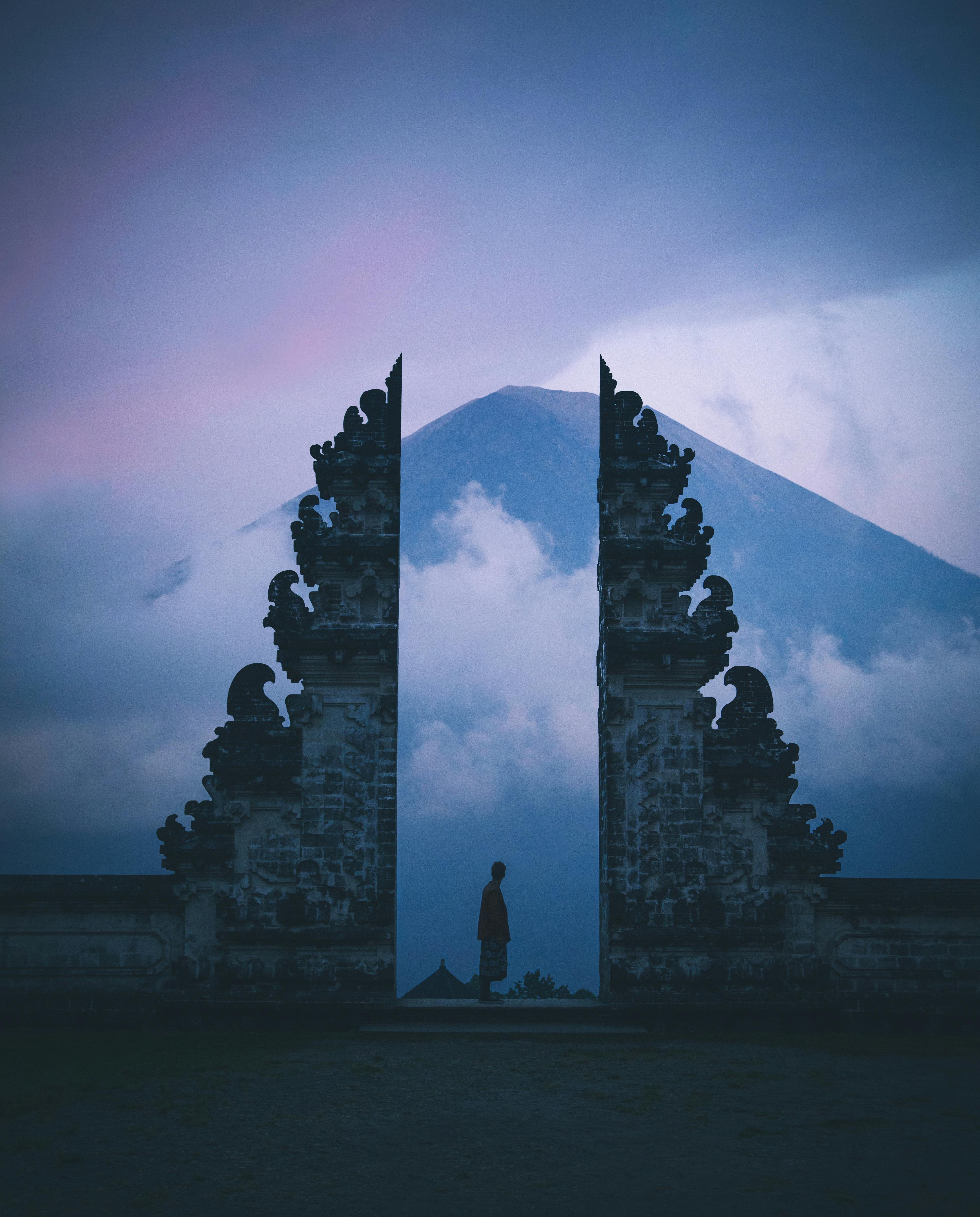
The difference is visible in small gestures. A road that appears to the visitor as access may be, for someone else, a route of work or worship. A pause that looks picturesque may be part of a rhythm not arranged for observation. The challenge of a place like Uluwatu is not merely that many people come to see it. It is that seeing can begin to feel like ownership.
Ceremony Beside the Itinerary
Tourism has a way of translating everything into sequence. Arrive, park, walk, watch, photograph, leave. Ceremony does not always cooperate with sequence. It may begin earlier than expected, continue beyond attention, or hold meaning before display.
A respectful visitor understands that not everything visible is available. This is a simple principle, but a difficult one in a culture trained to document presence. The more accelerated a destination becomes, the more important it is to preserve forms of life that do not answer to the visitor’s clock.
Not everything visible is available.
The Pressure of Being Seen
The pressure on cultural places is often described in numbers: arrivals, ticketing, congestion, capacity. These matter. But another pressure is harder to measure: the pressure of repeated visibility. When a ritual, path, garment, gate, or gesture becomes a visual asset, it may remain physically present while losing some of its privacy.
The question is not whether travelers should come. Travel, at its best, can sharpen humility. The question is whether the terms of attention can be made less extractive. Can visitors arrive without turning continuity into performance? Can a place be admired without being simplified?
Continuity at the Edge
Uluwatu’s power comes partly from the edge itself: land ending abruptly, water below, sky expanding beyond scale. Edges invite drama. But culture is not drama alone. It is repetition, maintenance, and forms of care that may not look spectacular from the outside.
To write about temple time is therefore to write against speed. It is to admit that some rhythms cannot be improved by efficiency. Some kinds of beauty are not heightened by closer access. Some forms of continuity survive because they remain, in essential ways, not fully available.
A destination can grow without becoming shallow, but only if it learns to protect what cannot be packaged. Uluwatu’s cultural question is not whether the world will keep looking. It will. The question is whether looking can become more careful.
“Some forms of time cannot be accelerated for visitors.”