From The JULY 2026 Issue
Fire After Six
The Uluwatu table is built from smoke, salt, lime, and the hour before darkness.
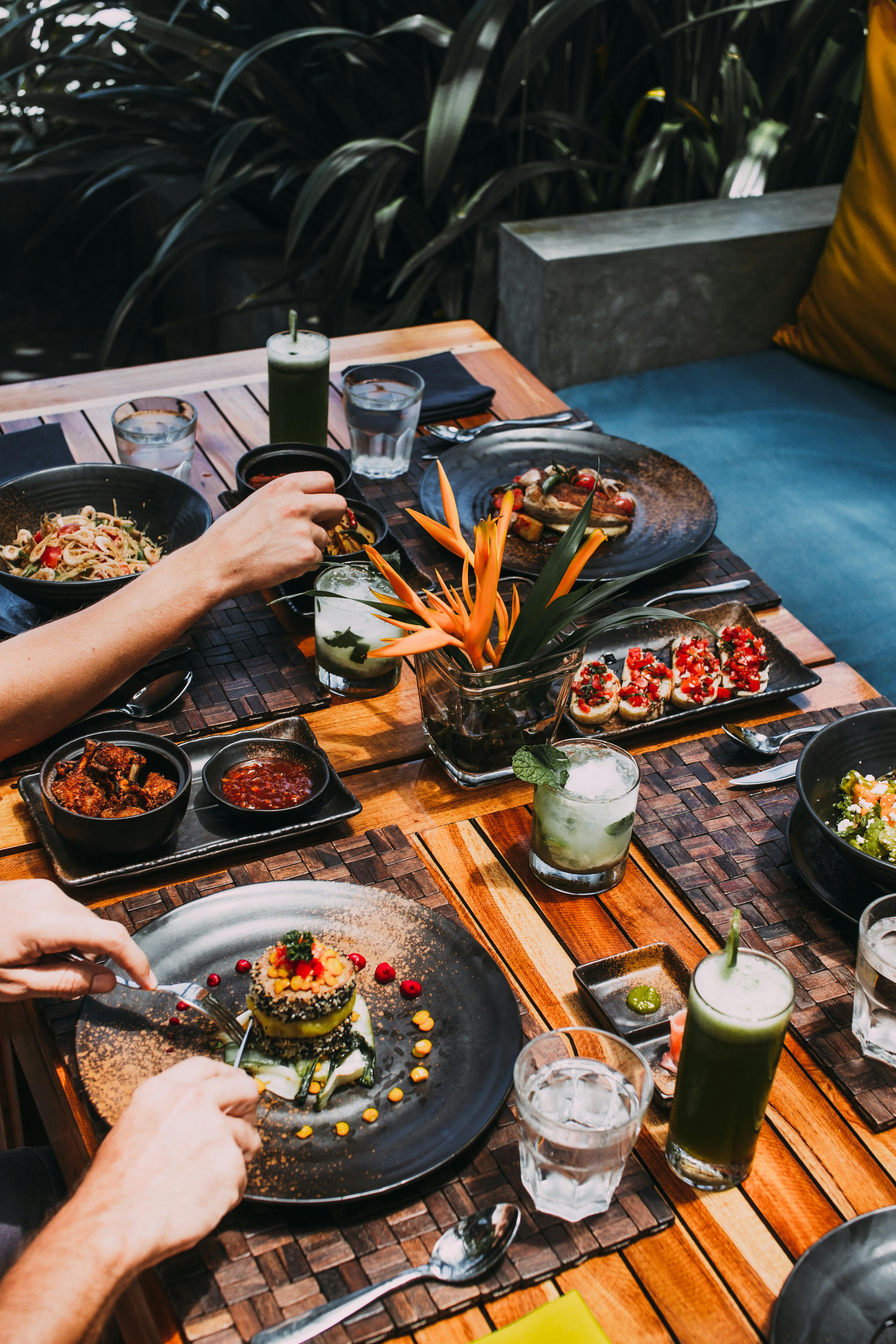
There is a kind of food that only makes sense after heat. It is not delicate in the usual way. It wants flame, citrus, salt, a cold glass, a chair pulled back from the table, and the relief of having stopped moving. Uluwatu understands this appetite better than many resort destinations because the day has already done half the cooking.
By six, the visitor has been altered. Skin is salted. Hair is disobedient. The road has taken longer than expected. Lunch feels like an earlier life. What the evening asks from a table is clarity: fish with smoke still attached to it, a sharp salad, rice, sambal, lime, something bitter, something cold, nothing that requires architectural explanation.
The danger in Uluwatu dining is the temptation to confuse view with hospitality. A table near the ocean can forgive a great deal, but not everything. Service still has to read the room. Glassware still matters. Timing still matters. The music must know when to disappear.
The most persuasive tables here do not behave as though they have invented island pleasure. They simply understand that appetite after sunset is a practical matter first and a luxury matter second.
“The best summer table does not perform abundance. It sharpens appetite.”