The New Seoul Room
Why the most memorable rooms in Seoul are becoming quieter, smaller and more specific.
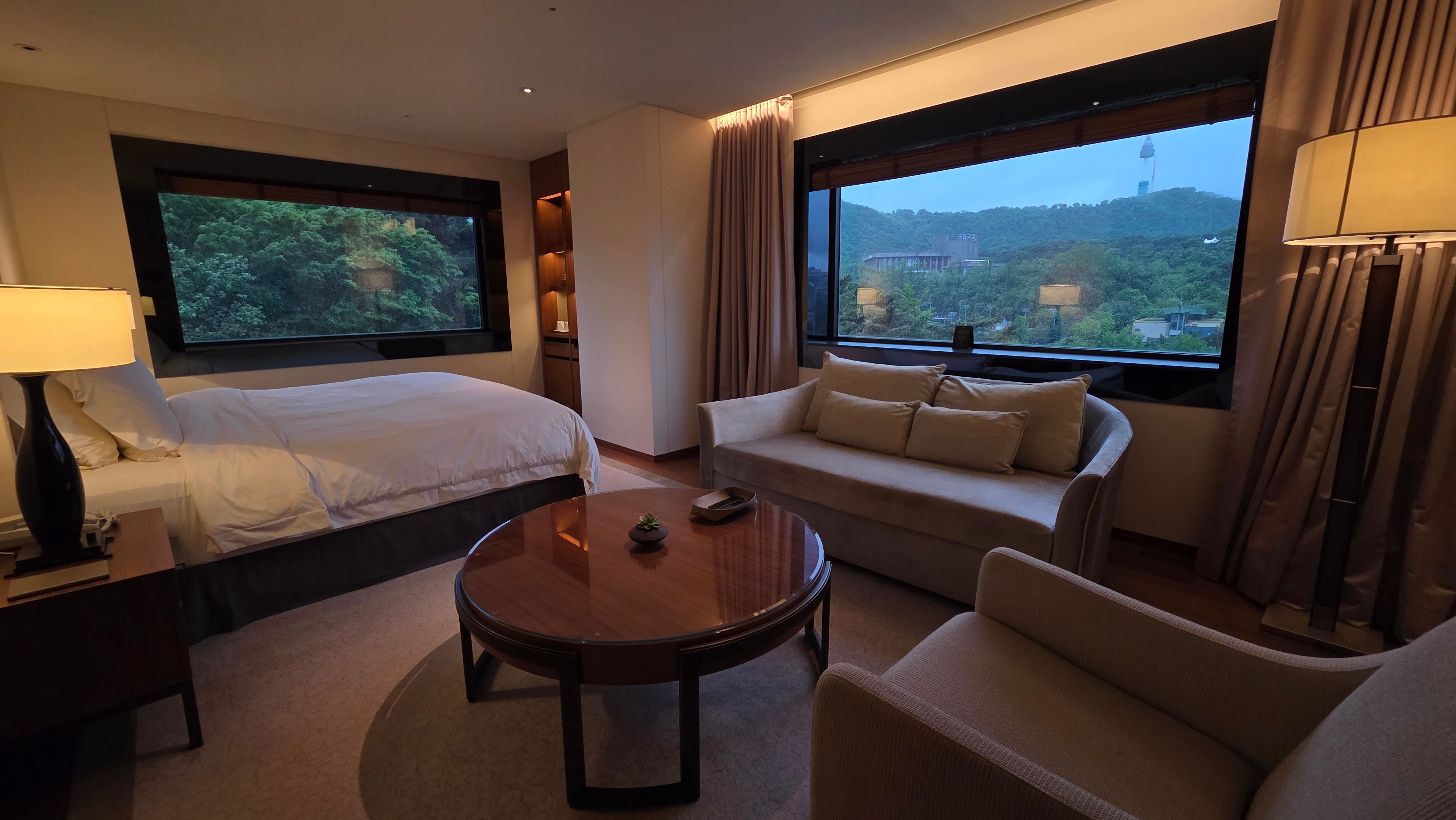
The new Seoul room is not trying to be large in the old way. Its confidence lies elsewhere: in the placement of a window, the decision to leave a wall quiet, the proportion of corridor to bedroom, the silence of the entrance before the view appears. Luxury has not disappeared from the room. It has moved into the edit.
For years, premium hotel language in many cities was built around accumulation. More marble, more views, more services, more recognizable cues of international comfort. Seoul has absorbed that language and, in its more interesting rooms, stepped away from it. The strongest rooms now feel specific rather than generic. They know which neighborhood they are in. They understand that a guest remembers the angle of morning light as clearly as the brand of the linen.
The entrance matters because Seoul is a city of thresholds. A good room begins before the keycard works: in the lift lobby, the corridor width, the material underfoot, the sound that does or does not travel from the hall. The first ten seconds tell the guest whether the property has an interior life or only a booking page.
Windows do a different kind of work here. Seoul is not always conventionally beautiful from above, which is why its best room views are rarely simple postcards. They are layered: apartment towers, mountains, office glass, signage, rain, construction cranes, a roofline held in grey morning. The view is not a trophy. It is evidence that the room belongs to a real city.
Curtains are underrated instruments of hospitality. In Seoul, where the day can shift quickly from pale clarity to neon reflection, a curtain decides whether the guest experiences the city as glare or atmosphere. The best rooms allow adjustment without ceremony. They let the guest become the editor.
Scale is also changing. Smaller rooms can be more memorable when the decisions are exact. A compact plan forces judgment. Where does luggage go? Where does the phone charge? Can two people pass without negotiation? Does the desk face a wall, a window, or the room itself? The room becomes a sequence of answers.
The neighborhood enters through details. A Bukchon stay should not feel like a Gangnam tower. A Seongsu loft should not pretend to be a resort. A Jung-gu room may carry the ceremonial formality of old Seoul without becoming nostalgic. The strongest properties understand that location is not a line in metadata; it is a set of obligations.
Photography now precedes booking, and hotels know it. But the rooms that endure are not those designed only for the first image. They are the rooms whose photographs make a promise the stay can keep. Seoul is learning this distinction quickly. The new room is not a backdrop. It is an argument for specificity over generic luxury.
“The strongest rooms now feel specific rather than generic.”